In Nyakatonzi, the valley dams have been empty since around March 2026. They were dug five years ago and were meant to be the insurance policy. Instead the Basongora herders have watched close to 300 cattle die, and are selling what survives at whatever price the market gives, because a weak cow fetches something and a dead one fetches nothing. “Our animals are dying because there is neither pasture nor water,” Ham Natuhwera told reporters this month. “Every day we lose more cattle, and those still alive are extremely weak.”

It has been a hard year for the whole country. The government warned in May that June to August would be dry, and it was drier and longer than expected. Gardens failed at germination in several districts, and food prices have climbed accordingly.

In Kasese the shortage has been unusually stubborn. In Busongora North in areas like Rugendabara, Kitswamba, Kabatunda-Kirabaho and Bwesumbu, water coverage sits at about 35 per cent, against a district average above 65. Ponds and shallow wells have gone. Women and girls are walking further each day for water, and some households have given up and taken what they could find. Health centres are reporting more typhoid in children as a direct result.

And now the rain is coming.

The Uganda National Meteorological Authority expects near-normal to above-normal rainfall from September through December, with warmer-than-average temperatures. Steady rains from mid to late September, peaking from the end of October through November, and possibly running into early January.

For most of Uganda that is relief. For Kasese it is also a warning, and we should say so plainly. Ground baked hard for six months does not drink, it sheds. And this district has a record. Nyamwamba burst its banks in May 2013 and killed four people sheltering in a shop. It came again in 2014, and through 2016 to 2020, taking the Kyanjuki-Bulembia bridge and flooding Kilembe Mines hospital badly enough that it had to move. In 2020 around a hundred homes were left uninhabitable. In 2023 the makeshift bridge went and people were crossing on foot. The causes are not mysterious: a silted riverbed, gardens and houses pressed right up to the bank, and slopes stripped of the cover that once slowed the water down. These are just few of the records that have happened here before.

What should households do now, before mid-October

  • Clear your drainage this month, not when it starts. Trenches, culverts and gutters around the home. Areas close to the river banks of Nyamwamba, Nyamugasani, Mubuku, Lhubiriha among others.
  • Agree an evacuation point on high ground as a family, and a route to it. Decide it now, calmly, not at 2am in the dark.
  • Pack one bag you can carry: documents, torch, a little food and water, any medicine someone in the house depends on.
  • Do not plant or rebuild on the riverbank. Leave Nyamwamba, Mubuku and Nyamugasani room. The river will take it back.
  • Move animals off low ground early. Do not wait to see the water.
  • Harvest the rain. Tanks, gutters, jerrycans. The water that floods you in November is the water you did not have in August.
  • Keep treating your drinking water. Typhoid rises in the flood as surely as it rose in the drought.
  • Check on your neighbors — the elderly, pregnant women, people with disabilities. They move slowest.

What GEDA has been doing about it

None of this is new to us. Through Livelihood Improvement and Climate Change Response through Restoration of Degraded Landscapes, supported by Expertise France, we have been putting soil and water conservation measures across at least 15 hectares in Kasese Municipality, the trenches and cover that slow runoff, hold soil and keep silt out of the rivers in the first place.

With Kasese Municipality, under the Covenant of Mayors in Sub-Saharan Africa, we planted a one-acre model plantation on the bare hills of Nyakabingo, trained trainers in forestry and wetland management, and helped municipal staff build the mapping skills behind the Urban Forestry Management Plan 2023–2032.

We work with women on efficient cooking stoves, heat-retention baskets and briquettes and above all sensitization of communities — because every tree not cut for firewood is a tree still holding a slope together. And after the May 2020 floods, we carried out the needs assessment and got support to women and girls living in the camps.

A dry riverbed and a flooded one are the same problem wearing different clothes. The work that would have softened this drought is the same work that will soften the coming rain.

Let’s be on alert and watch as the rains start.
Kasese is one of the Districts in Uganda with the highest burden of stunting amongst children under five years and is ranked 3rd in Uganda and first in the Rwenzori sub Region with the highest prevalence of child marriages and teenage pregnancies (GoU, 2022) (UNFPA, 2021) a situation that was exacerbated by the COVID-19 pandemic presenting a double burden.

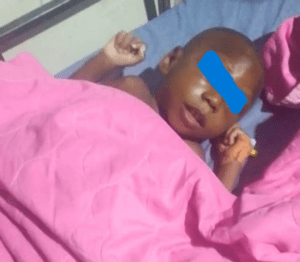
To confirm this, during the past weeks social media was awash with photos of Gilbert a 5 year old boy that was suffering severe malnutrition as a result of being neglected by the parents. He was left at the mercy of his grand parents who also lived in severe poverty and so Gilbert seemed to have been left at the mercy of his creator. During a field work by one of the community volunteers, she came across the home where Gilbert was lying naked on the ground and immediately alerted different concerned leaders. Gilbert was rescued and transferred to hospital for further management.

Having learnt about this situation, GEDA Uganda’s management reached out to the Community Development Officer of Maliba sub county and the volunteer that discovered the child to ascertain the situation but also finding out how the institution would help. The CDO explained that the child needed a lot of support given the family background and asked different partners to consider supporting this child.

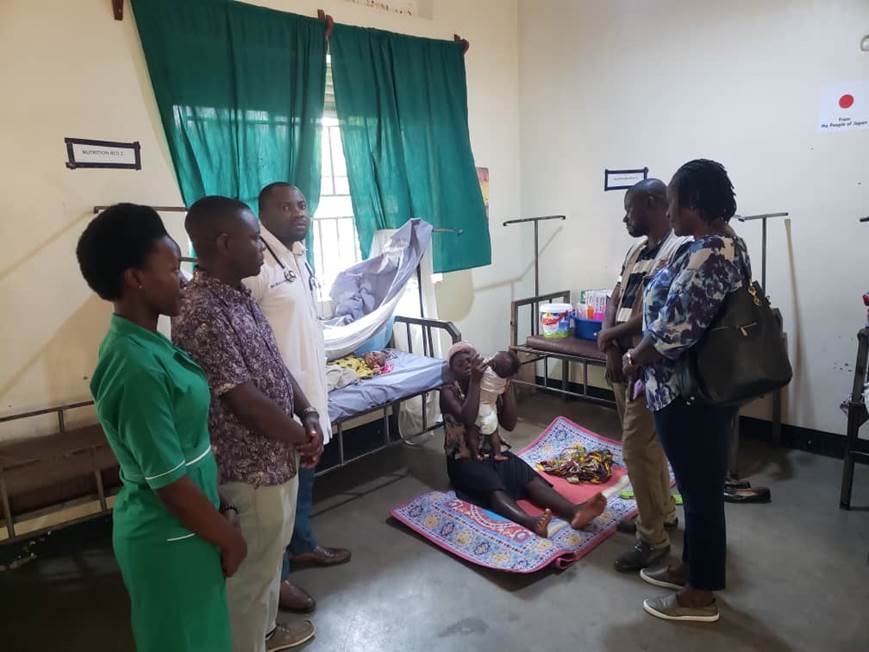
GEDA Team with the Medical Director at the hospital ward where Gilbert is admitted.

GEDA staff then went to St. Paul’s Hospital to check out the condition of the child. We met Dr. Karabyo Samson, the Medical Director of St. Paul’s Hospital, to further understand how Gilbert can be meaningfully assisted to recover. According to Dr. Karabyo, he said that due to severe malnutrition, Gilbert could be suffering from other underlying medical conditions. He said his treatment was going to take some time, with hope to stabilize the boy’s condition. He further said that foremost support that is needed would be social support that included, nutritious foods, drinks, soap and other sanitary items among others.

Gilbert at the nutrition ward

During this same visit GEDA Uganda discovered a number of other malnourished Children that were on the ward that needed social support as well which GEDA provided as well.


Asylum seekers from the Eastern DRC-North-kivu crossed into Uganda through kitholhu, Karambi and Mpondwe sub-counties in Kasese District on Sunday 3rd-Apr-2022. About 3,220 individuals/asylum seekers crossed to Uganda through various porous borders and temporarily resettled in Villages of Kisolholho, Busigha, Kasinga, Kisebere, Kiraro etc. in Kasese district. Major reason of flight was attributed to brutal attacks allegedly by ADF rebels on civilians in DRC.

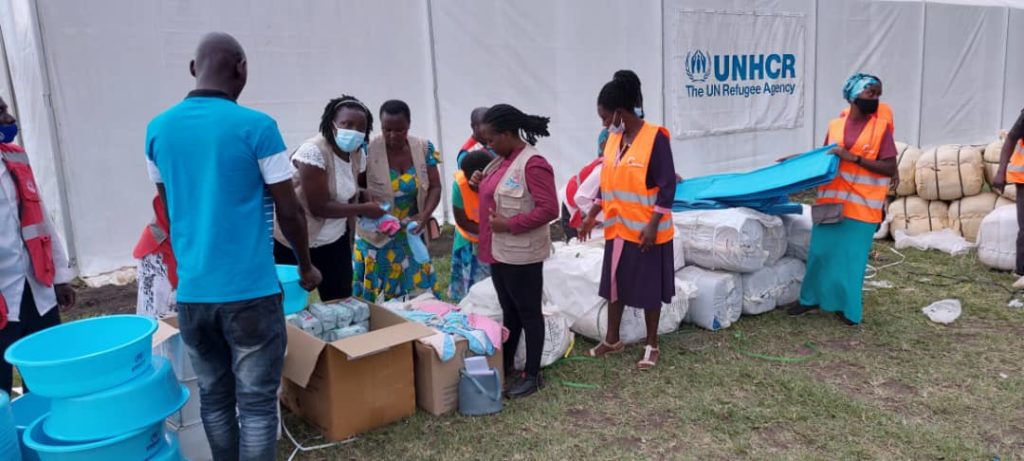
Shortly after that OPM and UNHCR quickly swang in action and established a holding center at Bwera Primary Teachers college-PTC to offer emergency response services to these POCs. Several partners including GEDA Uganda also followed suit to offer services at the holding center. The other partners included but not limited to UNHCR, UNWFP, OPM, CAFOMI, MTI, ALIGHT, URCS, ICRC, AIRD, Kasese Scouts, DLG, UPF and NRC. Greater efforts have been made and coordination directed towards ensuring safety and wellbeing of everybody at the center.


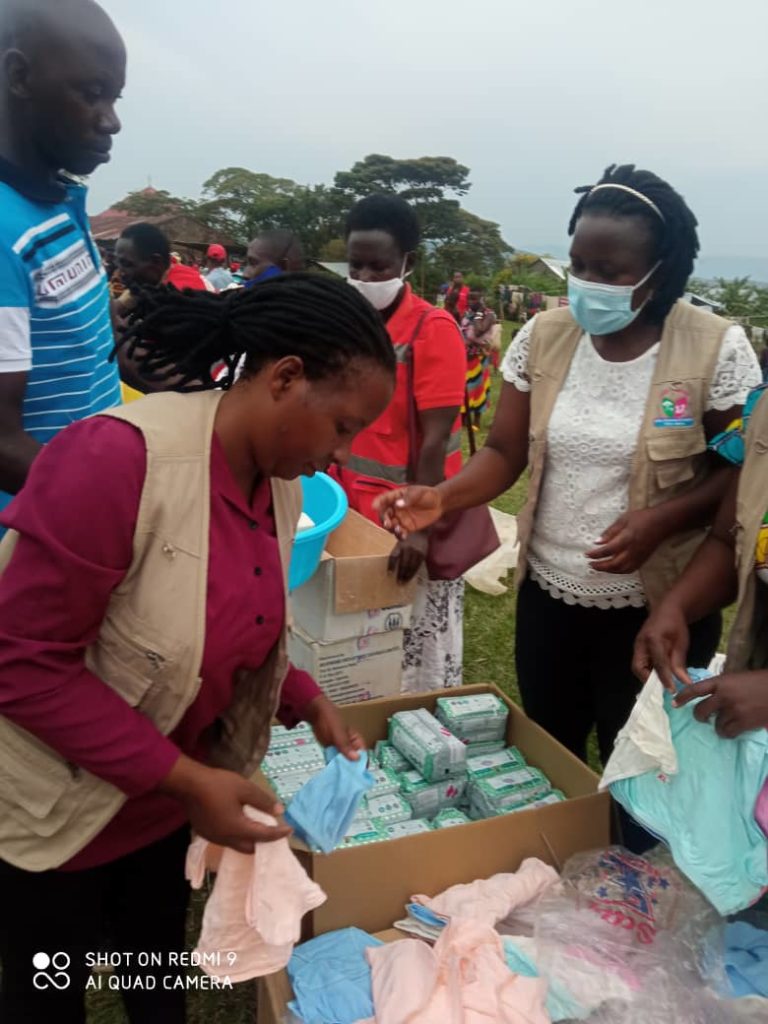
GEDA Uganda staff sorting reusable sanitary pads for Distribution

GEDA Uganda’s core assignment,

Menstrual hygiene management, GEDA Uganda has been charged with supply of reusable sanitary pads, sensitisation of the POCs on how best they can use the pads, several FGDs have also been conducted to get feedback on how the reusable sanitary pads are working.

Pyschosocial support and GBV awareness, GEDA Uganda in partnership with ALIGHT and CAFOMI have been charged with these services that have been offered deligently.

GEDA Uganda has continued to support the Persons Of Concern (POCs) with these necessary services to make their life comfortable at the holding center.


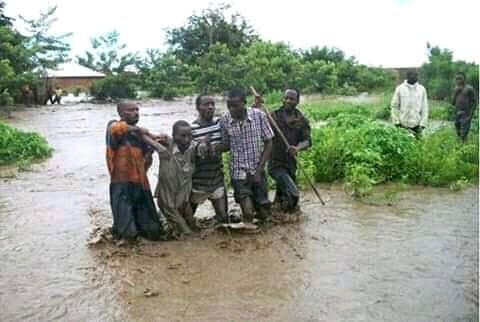
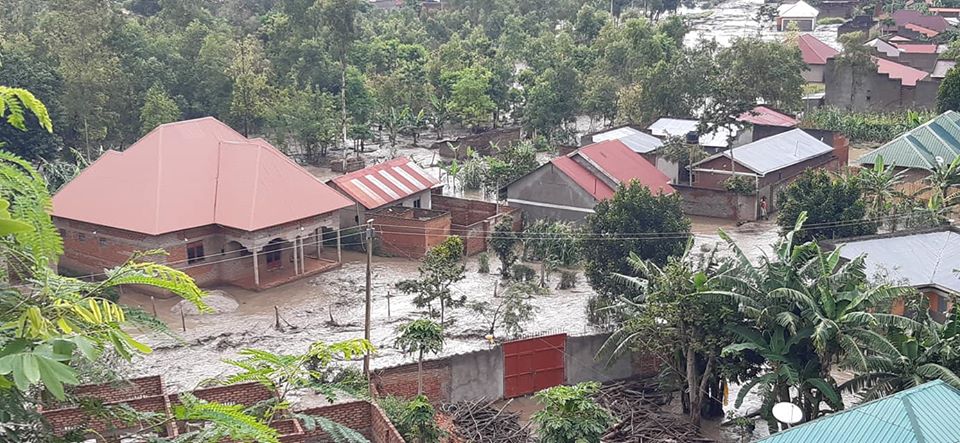
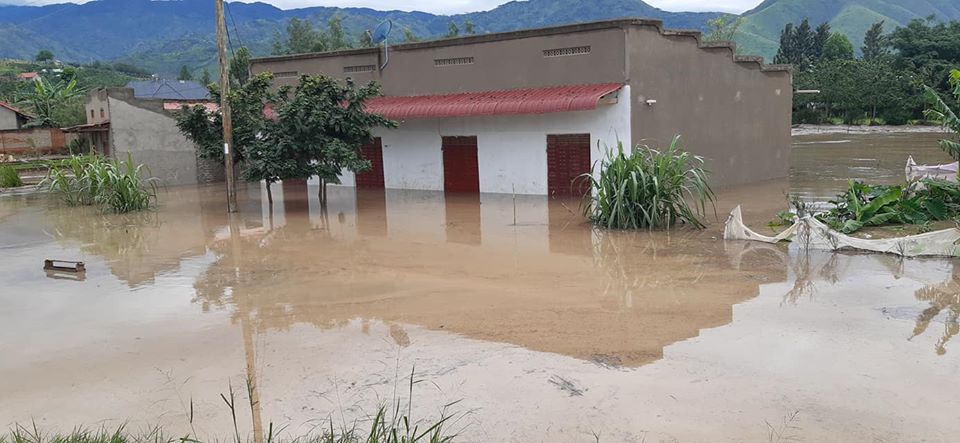
A repeat of the tragedy that happened in May 2013 has ravaged Kasese District and Bundibugyo Districts last night. The floods that started shortly after some rains last night started with Kilembe mines hospital loosing her buildings.

The situation turned worst when rivers Nyamwamba running from Kilembe through Kasese town, Nyamugasani in Bukonzo East of the District, Mubuku in Busongora North and other streams burst their banks and spilled water into the nearby communities with rolling stones due to the bursting rivers.
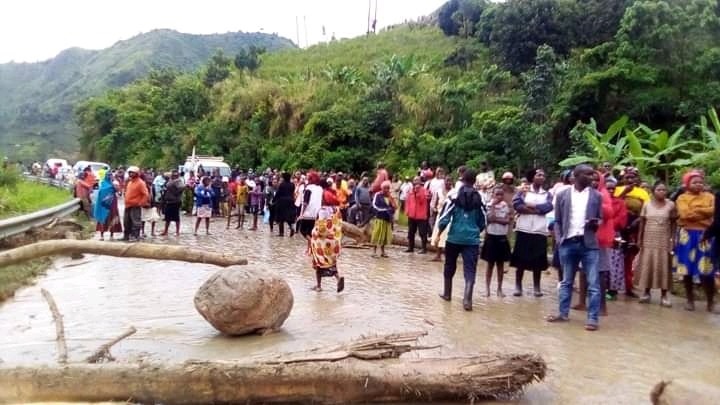
River Lamia in Bundibugyo District at the boarder of Uganda-DRC also burst its banks to destroy the neighbouring areas. Ntoroko District was also not spared.

The heavy rains in the region saw a number of rivers in the three districts burst their banks due to flooding.

In Kasese District the bursting of the above rivers has affected several parts including Kilembe, Basecamp, Parts of Nyamwamba Division-Saluti A&B, Kanyangeya, Kizungu, Kisagazi, Nyakasanga, Kyarumba in Bukonzo East, Bugoye, Karusandaara, Maliba-Kyanya In Busongora north among others.

In Bundibugyo a number of areas affected include Lamiya I,II and Central, Mulungitanwa I,II, and III, Katoke, Kisenyi, Kitumba,Busunga among others.

Residents of Kilembe in Kasese Municipality stranded after roads were blocked by the floods.

The floods come amidst the covid-19 lock down in Uganda and many other countries. This becomes a double tragedy for the people of Kasese, Bundibugyo and Ntoroko Districts.

Households in the most affected areas have remained homeless and as GEDA Uganda mothers, children and girls remaining highly vulnerable is our concern. We commit to our Gender agenda to assist in any ways possible especially the vulnerable groups. Our team is on ground to do the vulnerability assessment that will inform our next steps as quickly as possible.

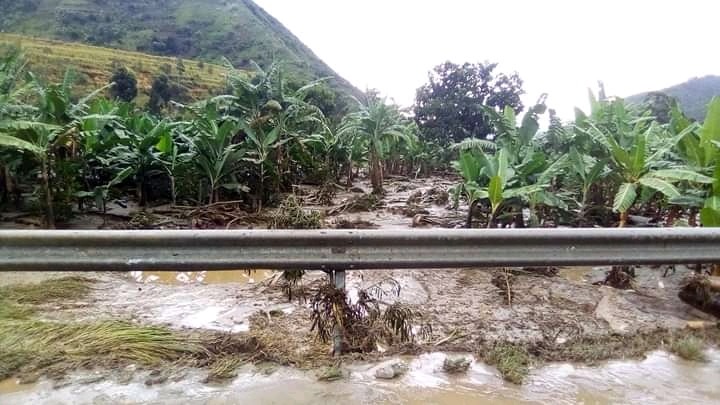
Destroyed crops by floods on the slopes of Mt.Rwenzori-Kasese District

We continue to urge the Districts’ disaster preparedness committees to integrate the issue of gender in their programming during this trying moment for the region.

Houses immersed in water in Kasese town.

The deadly pandemic hit the world late last year in china and has since then moved all over to the whole world. Uganda registered her first case of covid 19 on 21st March 2020 and since then the cases have up to date raised to 55.

There has been though a great management in Uganda that has led to now 28 recoveries of the patients.

Due to the numerous measures especially the lock down GEDA Uganda also closed her physical office and currently staff work from home online.

GEDA Uganda has since been doing a lot of information dissemination through radio programs, running radio messages/jingles in the local languages on the local radio stations, social media to sensitise the communities where they work about covid 19 and the preventive measures.

These have been appreciated by several communities listening in to these programs.

GEDA Uganda is in arrangement currently to do more information dissemination especially on Gender based violence related cases since these have reportedly increased during these days of lock down. As GEDA-Uganda this is one of the core mandates to tackle.

GEDA Uganda hopes to also engage the local community mega phones for information dissemination. These are owned in the communities and highly listened to for information dissemination.

We also continue to encourage everyone to stay home, wash hands regularly, keep social distancing and avoid touching the soft parts (mouth, eyes and nose)

Together the virus will be defeated.